
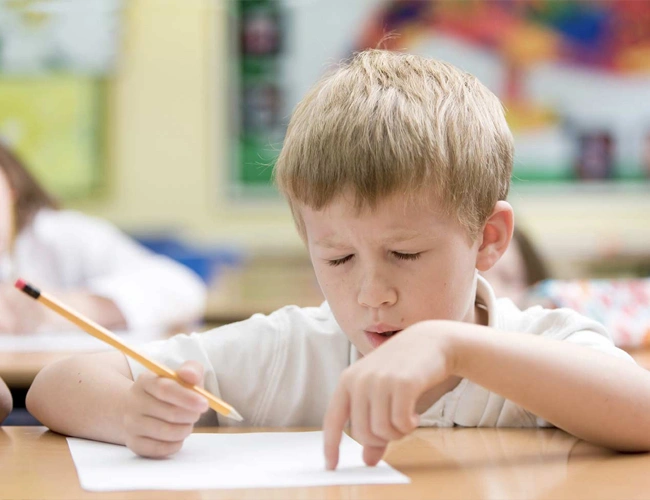
Children learn many skills in life—how to listen and speak, for example, or how to read, write, and do math. Some skills may be harder to learn than others. If your child has had appropriate learning experiences and instruction, but is not able to keep up with peers, it's important to find out why and how to help.
Children who learn and think differently can succeed in school, work, and relationships. Often, they can benefit from help that uses their strengths and targets any areas of need.
What is a learning disability (LD)?
Learning disability is a term used to describe a range of learning and thinking differences that can affect the way the brain takes in, uses, stores, and sends out information. Some children have specific learning disabilities (also known as LDs), such as reading or math disabilities. Others may have conditions that affect learning like attention deficit/hyperactivity disorder (ADHD) or hearing loss. Many children with learning differences and difficulties can have more than one learning disability or condition that affects learning.
What causes learning difficulties?
There are many reasons why a child may have difficulties learning. The causes aren't always known, but in many cases children have a parent or relative with the same or similar learning and thinking differences and difficulties. Other risk factors include low birth weight and prematurity, or an injury or illness during childhood (for example, head injury, lead poisoning, a childhood illness like meningitis).
Regardless of the cause of learning difficulties, the first step is to recognize your child is struggling and to discuss your concerns with your child's teachers and doctor. Together, you can find out what is contributing to the difficulties and make sure your child gets any help needed.
How do I know if my child has learning differences and difficulties?
Learning and thinking differences aren't always obvious, but there are some signs that could mean your child needs help. Keep in mind that children develop and learn at different rates. Talk with your child's teacher and let your child's doctor know if your child shows any of the following signs:
- Notice if anything is out of the ordinary.
- Observe behaviors to determine patterns.
- Talk to a teacher, social worker or caregiver to validate.
- Engage with trusted professionals, like pediatricians.
Preschool children may have:
- Delays in language development. By 2½ years of age, your preschool-age child should be able to talk in phrases or short sentences.
- Trouble with speech. By 3 years of age, your child should speak well enough so that adults can understand most of what they say.
- Trouble learning colors, shapes, letters, and numbers.
- Trouble rhyming words.
- Trouble with coordination. By 5 years of age, your child should be able to button clothing, use scissors, and hop. They should be able to copy a circle, square, or triangle.
- Short attention spans. Between 3 to 5 years of age, your child should be able to sit still and listen to a short story. As your child gets older, they should be able to pay attention for a longer time.
- Frustration or anger when trying to learn.